← Back to Grow-Gronomy
Wilchem Biotics / Adding nature back

Life beneath.
Potential
above.

A living approach to crop nutrition.
Biology, roots and soil. Working together.

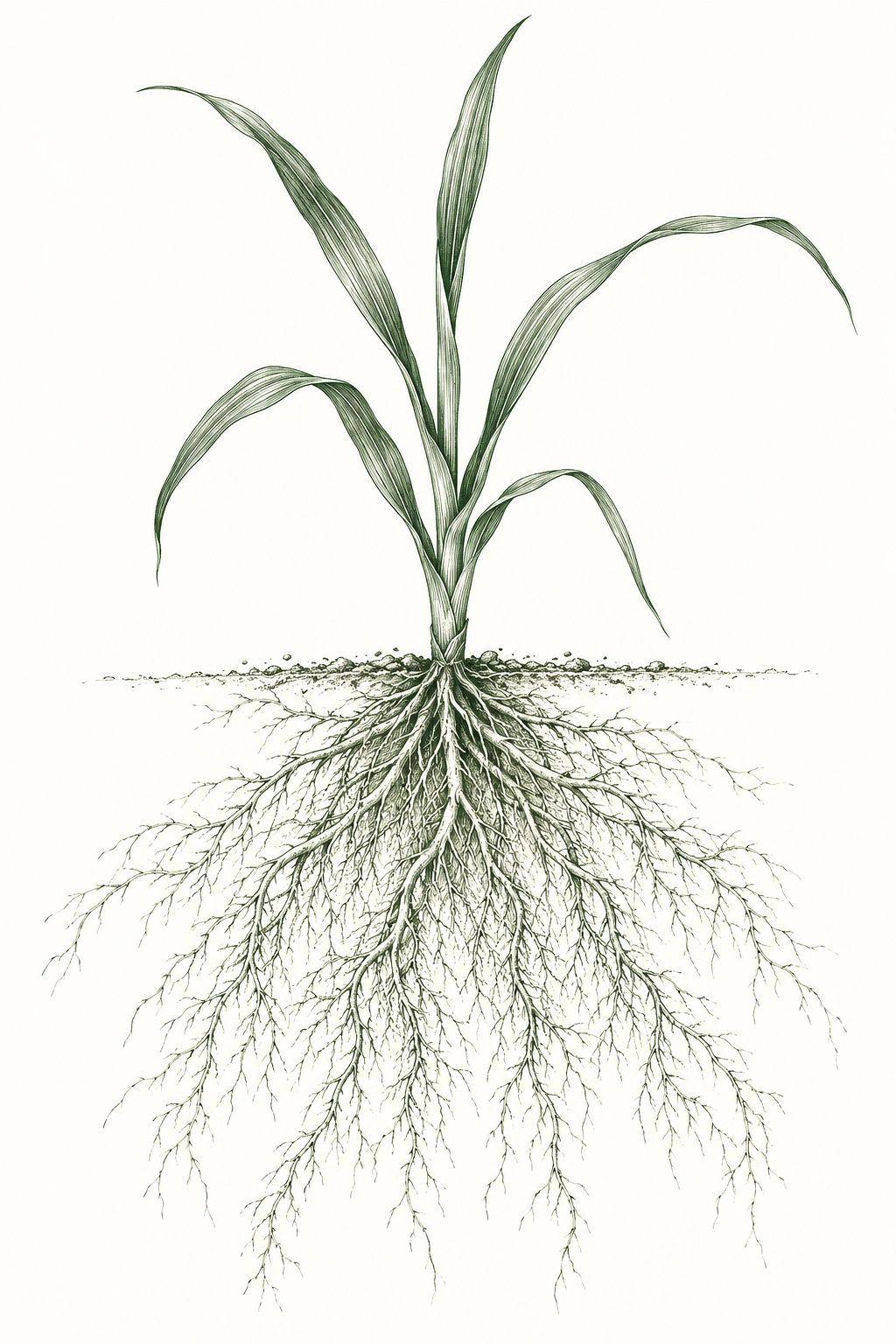
Fine green botanical illustration of a cereal plant, with fibrous roots beginning at the soil surface
01 / A living root zoneBotanical study · conceptual
Broadacre biology.
Made for your next season.
↓Six microbial species.
One BioFOR blend.
01 / The blendsBiology with a purpose.

Broadacre nutrition & legume support

BioFOR

Put the root zone
at the heart of your program.

Six microbial species plus Metabolites, formulated for broadacre crops, soils with NPK lockup and complementary legume Rhizobium support.

1 L/haBroadacre application
1,000 LMade-to-order IBC
1 monthUse from batching
Species & calculated CFU profile +

Calculated contributions per mL of finished blend. Not measured viable counts after blending or storage.

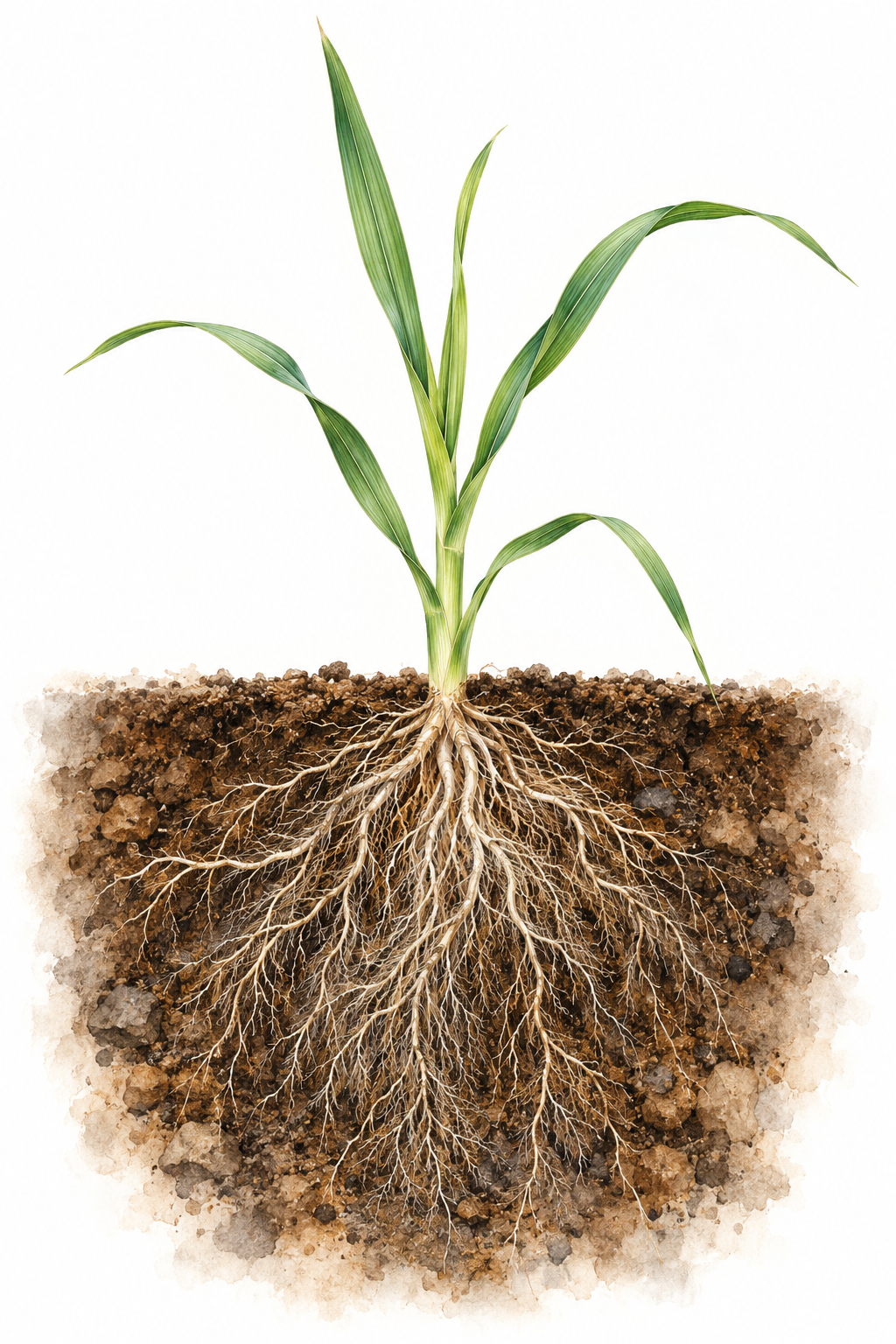
Botanical illustration of a young cereal and its root system
WILCHEM
BIOTICS
ROOTS
SOIL
LIFE
It starts with what happens below.
02 / A closer lookSmall organisms. Distinct roles.

A whole world.
At the root.

Get to know the biology inside each blend. Select a species to explore its role, and switch units to see its calculated CFU contribution.

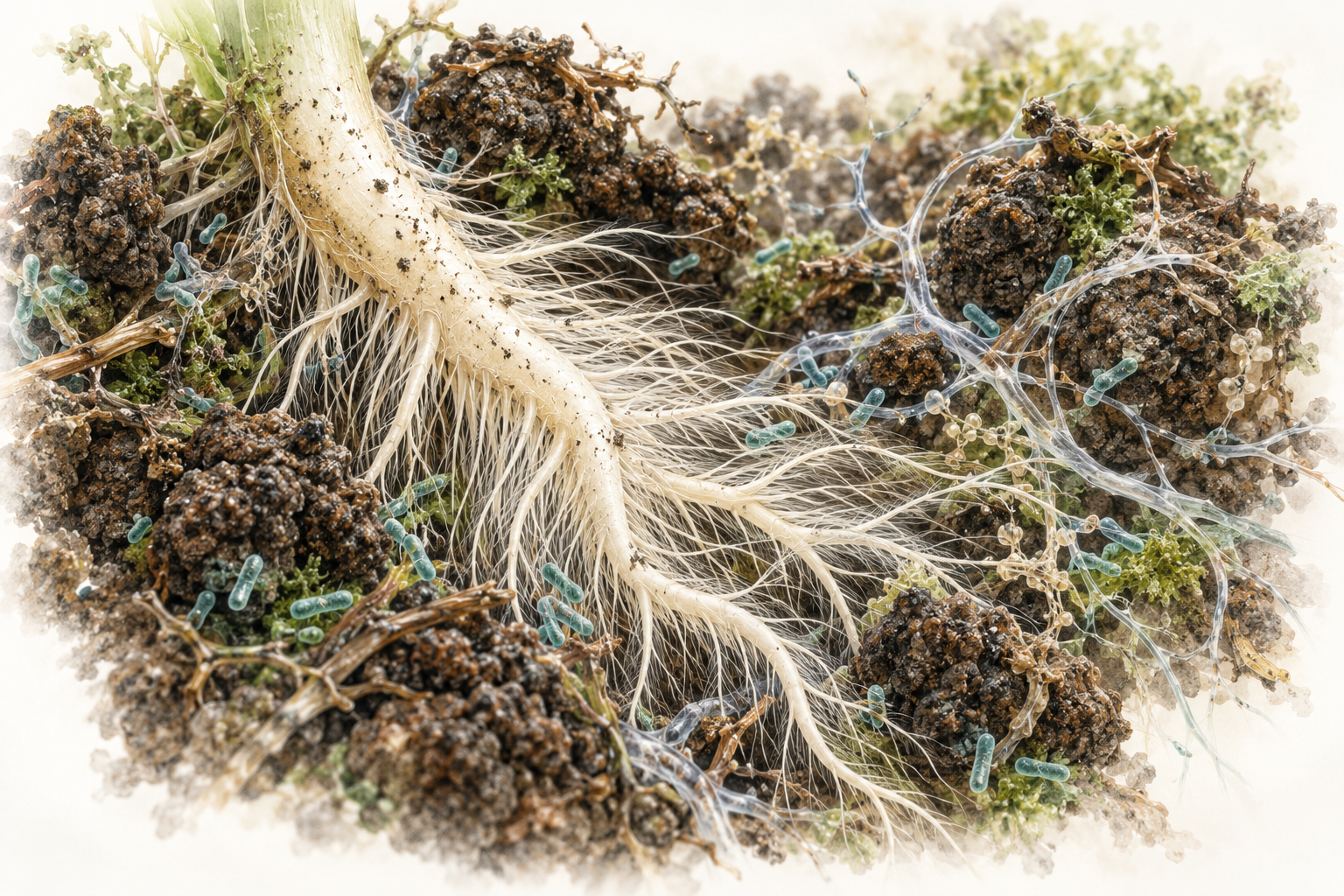
Conceptual close-up of a root surrounded by fungal filaments and bacteria
THE RHIZOSPHERE
Where roots and biology meet.

Conceptual illustration. Organisms are enlarged and not to scale.

Different species.
Complementary roles.

Root association. Nutrient cycling. Plant signalling. Explore how each species contributes to the biological approach.

Understanding CFU & biological roles

CFU means colony-forming units. Counts are calculated from website label concentrations and the supplied recipes; all strains and inputs belonging to the same species are combined. They are formulation input equivalents, not measured viable counts after blending or storage. Confirm the supplied lot specification before batching: historic label and package species listings differ.

Roles describe biological functions associated with each species, not a proven response from these finished blends. Establishment and crop response depend on strain, soil, moisture and management.

03 / International research

Science with roots.
A global perspective.

Explore the research on Azospirillum brasilense - one of the six microbial species in BioFOR.

2025
International recognitionWorld Food PrizeAwarded to Dr Mariangela Hungria
Researcher spotlight / Brazil

Dr Mariangela
Hungria

Soil microbiologist · Embrapa

Recognised for advances in biological nitrogen fixation and crop nutrition, Dr Hungria’s work has helped bring microbial research into agricultural practice.

Read about her award
Included in BioFOR

Azospirillum
brasilense

44 millioncalculated CFU/mL of BioFOR

Strain BR4 contributes to BioFOR’s broadacre nutrition and complementary legume Rhizobium-support focus.

Explore the evidence

Click to read
01Azospirillum research and BioFOR

The connection is the bacterial species: Azospirillum brasilense. International research explores its role in crop-root interactions and nutrient uptake. BioFOR contains strain BR4 of this species.

Published Brazilian studies used other strains, including Ab-V5 and Ab-V6. They support the wider scientific context, but do not establish equivalent performance for BR4 or the BioFOR blend. Dr Hungria’s award is not an endorsement of Wilchem products.

02Maize & wheat field trials · 2010

Hungria and colleagues evaluated selected strains at two Brazilian locations over multiple seasons. Yield responses occurred under the study’s low starter-nitrogen conditions. The authors attributed responses to increased uptake of several nutrients, rather than specifically to nitrogen fixation.

Read the original study ↗
03Maize meta-analysis · Brazil

A meta-analysis examined inoculation with Ab-V5 and Ab-V6 across 103 field trials at 54 Brazilian sites. It provides broader evidence for those strains and illustrates why the strain, crop and growing conditions matter when interpreting results.

Explore the meta-analysis ↗
04 / Western Australian field work

Closer to home.
Grounded in observation.

Glenalan Farm, Wanamal • Wheat Zen • 2024 demonstration. Explore reported soil and microbial community observations.

GA1GA3

Read the comparison in context.

GA1 used the baseline fertiliser program. GA3 added a wider systems treatment, including mineral nutrition, humate and biological inputs.

The document reports differences in soil nutrient availability and microbial community profiles. Because several inputs changed, this demonstration cannot isolate the effect of microbes alone.

The supplied report does not provide replication or statistical uncertainty for these displayed observations. Microbial counts are document-reported ARISA observations, not CFU or proof of a beneficial outcome. These treatments are not the new BioFOR or BioBAC blends.

Open the full field report ↓
05 / Whitepaper

Whitepaper on
Biological Inputs.

Understanding the living connections between roots, soil biology and crop nutrition. A Wilchem synthesis of the supplied 2024–2025 technical material and published international research.

01Root partnershipsStart where the plant meets the soil.+

BioFOR combines Trichoderma harzianum and T. asperellum with four bacterial species and Metabolites. Its broadacre focus connects root development with nutrient access.

For legumes, Azospirillum brasilense provides the basis for complementary rhizosphere support. Continue crop-specific Rhizobium inoculation and assess nodulation; BioFOR does not replace the legume’s appropriate Rhizobium inoculant.

02Nutrient availabilityBiology within an NPK strategy.+

Azospirillum brasilense, Bacillus megaterium and B. mucilaginosus contribute biological roles associated with nitrogen fixation and phosphorus and potassium mobilisation. BioFOR is positioned for soils with NPK lockup, alongside soil testing, crop removal budgets and balanced nutrition.

Microbial activity does not create phosphorus or potassium. Access to soil reserves depends on mineralogy, moisture, pH, root activity and establishment of the organisms.

03Horticulture & soil pressureBioBAC in demanding root zones.+

BioBAC combines two Trichoderma species with six bacterial species and Metabolites. Its intended focus is horticultural crops, high disease pressure soils and stubble pressure.

The components contribute distinct biological functions. Performance of the finished blend needs its own validation; retain crop protection, residue management and diagnosis within the wider crop program.

04Freshness & evidenceLiving inputs need careful handling.+

Both blends are made to order in 1,000 L IBCs and used within one month of batching. The displayed species CFU figures are calculated formulation inputs; they do not certify viable counts after blending or storage.

International studies inform biological mechanisms. The WA demonstration offers local observations, but several inputs changed together. Neither evidence source alone establishes the response of these new blends.

Whitepaper sources & methodology

Sources include the Wilchem May 2024 compendium, 2025 packages, 2024 WA soil and leaf results, historic costings and compatibility chart; current blend recipes and positioning were supplied by Johan. Historic rates and prices are not current blend recommendations.

Hungria et al., 2010 — original research ↗

06 / Tank-mix screening

Plan the mix.
Protect the biology.

Choose BioFOR or BioBAC, then search by brand or active ingredient. View each blend’s screening result at the exact source test dose.

How to read your compatibility result +

Derived from available component evidence. Avoid: an adverse flag is present. Caution: a caution flag is present. No flagged conflict*: no adverse flag in the available data, but confirmation is required. Some constituents lack specific test evidence; no result validates the finished blend.

Screening descriptions conservatively interpret the source colours; the supplied chart does not give a written colour legend. Results apply to the exact listed formulation and test dose, not all products sharing an active ingredient. Refer to current chemical labels.

Tap a result to read its screening explanation and evidence limits. Source: Wilchem Biotics Compendium, May 2024, pages 19–22.

07 / Made for your farm

Made for your farm.
Ready for your season.

Choose whole 1,000 L IBCs. Send your details to Wilchem to confirm pricing, batching and delivery before production.

BioFOR batch planner

Plan hectares.
Then plan your batch.

1 L/ha · 1,000 L IBCs · use within one calendar month of batching.

Finished volume1,000 L
BioFOR coverage1,000 ha
Use-by deadlineChoose batching date

Coverage is calculated at 1 L/ha of BioFOR product. Water carrier volume and timing should suit the crop and equipment.

Your order & delivery details

Made to order. Confirmed with Wilchem.
Made-to-order terms

By proceeding, you acknowledge that BioFOR and/or BioBAC will be blended specifically for your order in 1,000 L IBCs. A cancellation penalty fee will apply if you cancel a confirmed order. The fee amount or calculation and the stage at which it applies will be stated in Wilchem’s quotation and order confirmation.

The finished blend must be used within one month of batching. Delivery and intended application timing must fit this use window. Production begins only after Wilchem confirms the order and commercial terms.

This opens your email application with the request filled in. Review and send the email to Wilchem. The website does not submit or store your details, take payment or confirm an order.